
Wire
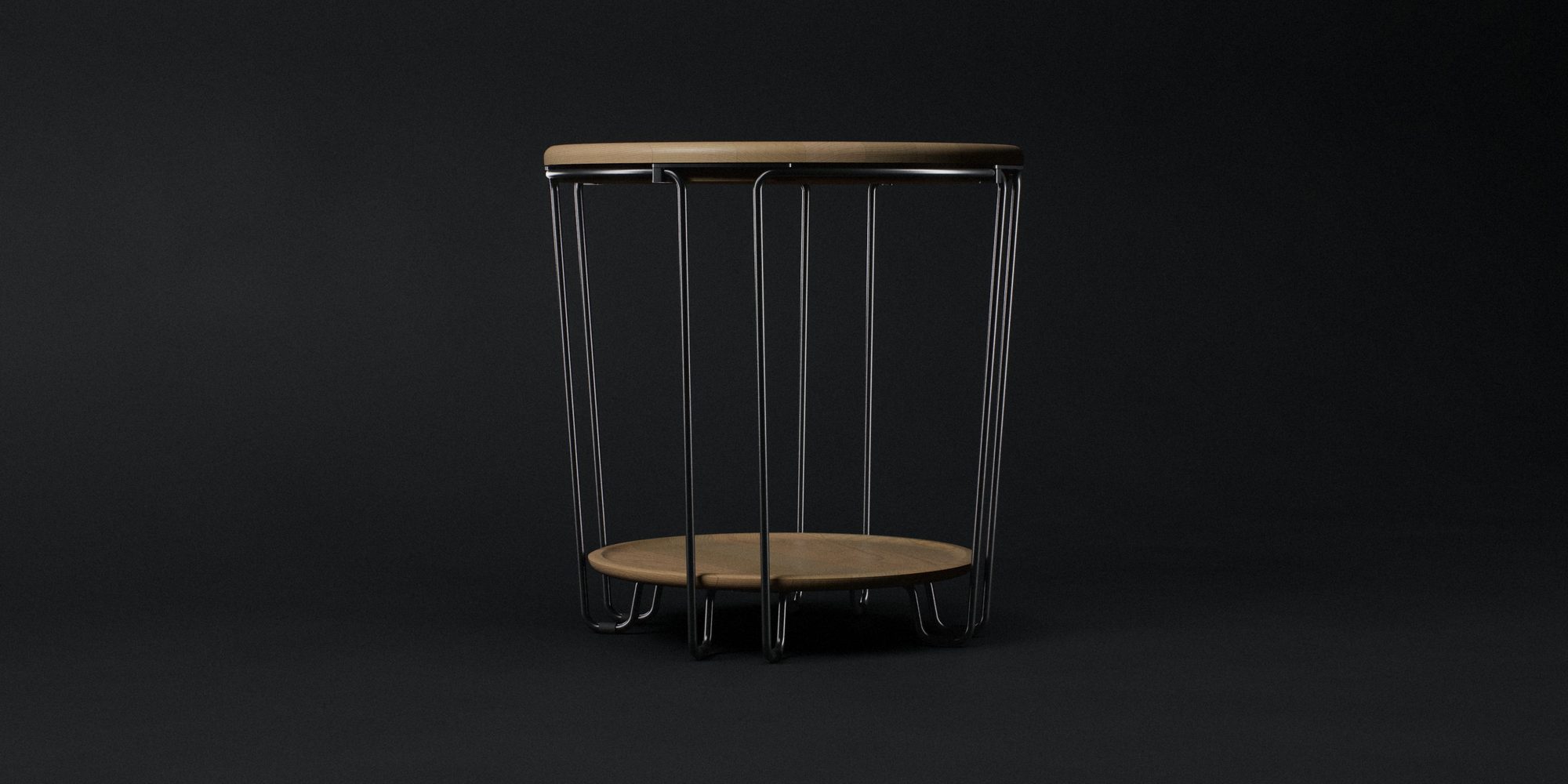 Render, 2026
Role
Design, engineering, DFM
Year
2020 concept, rebuilt 2026
Materials
Oak, powder-coated steel wire
Status
Concept
Detail adds 8 process sections
Brief
A side table whose frame looks like one continuous bent wire. The design came first: a frame that reads as a single line, packs flat and goes together with one tool.
What was done
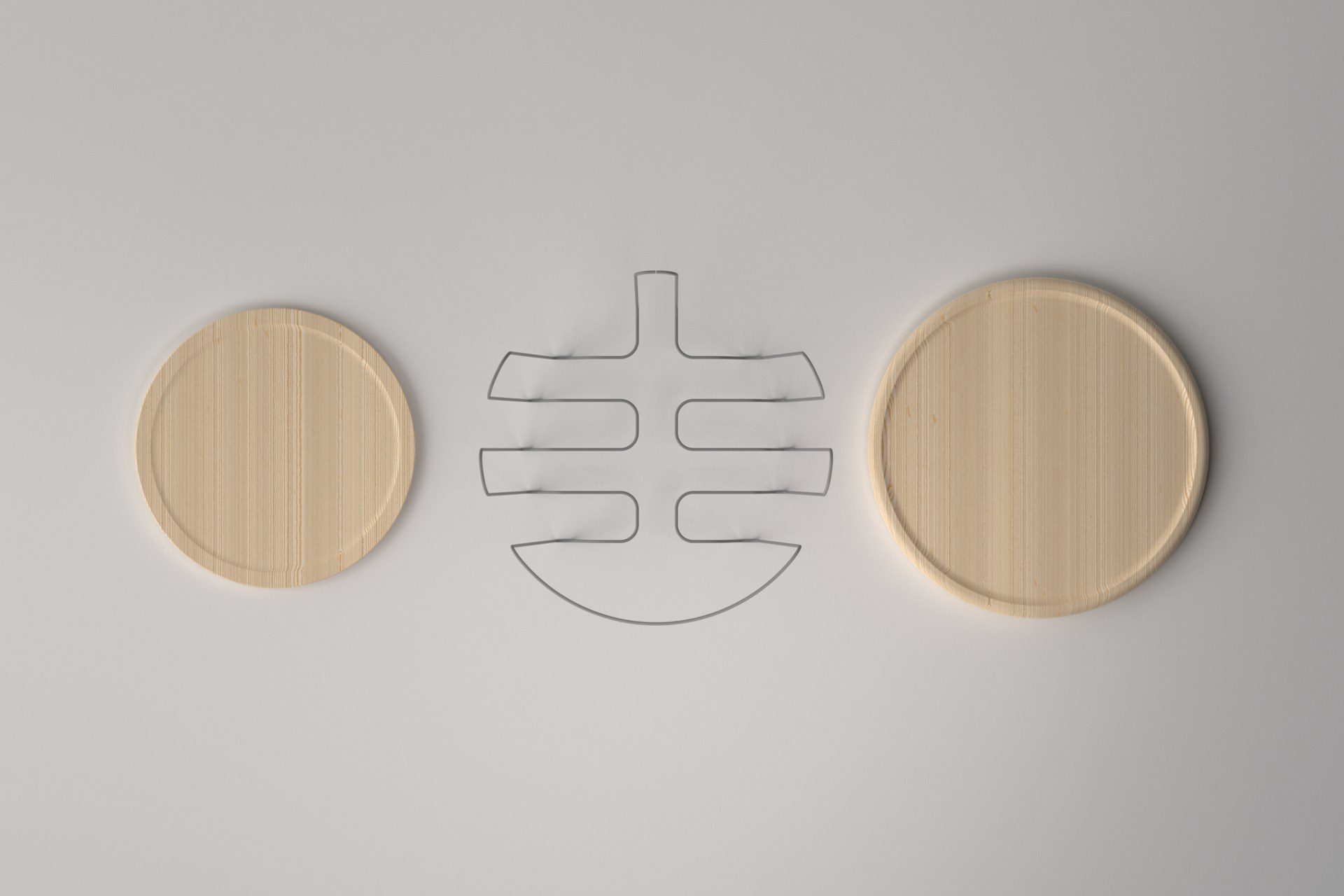
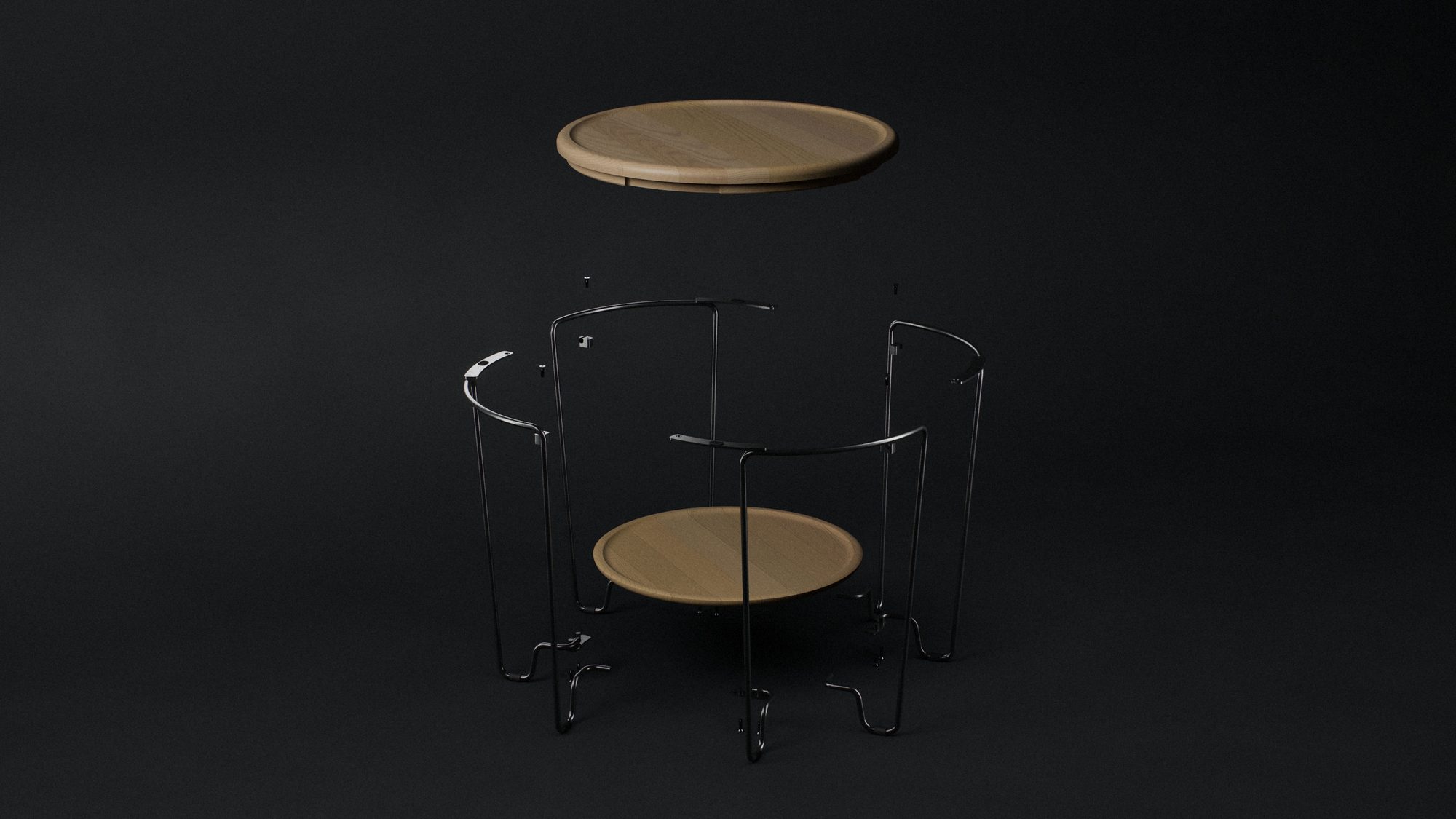
The frame was shaped around what a wire-bending machine can actually make, then split into four identical pieces that all join the same way. Cost was worked out from the finished design, then brought down where that didn't change the look.
Early insights
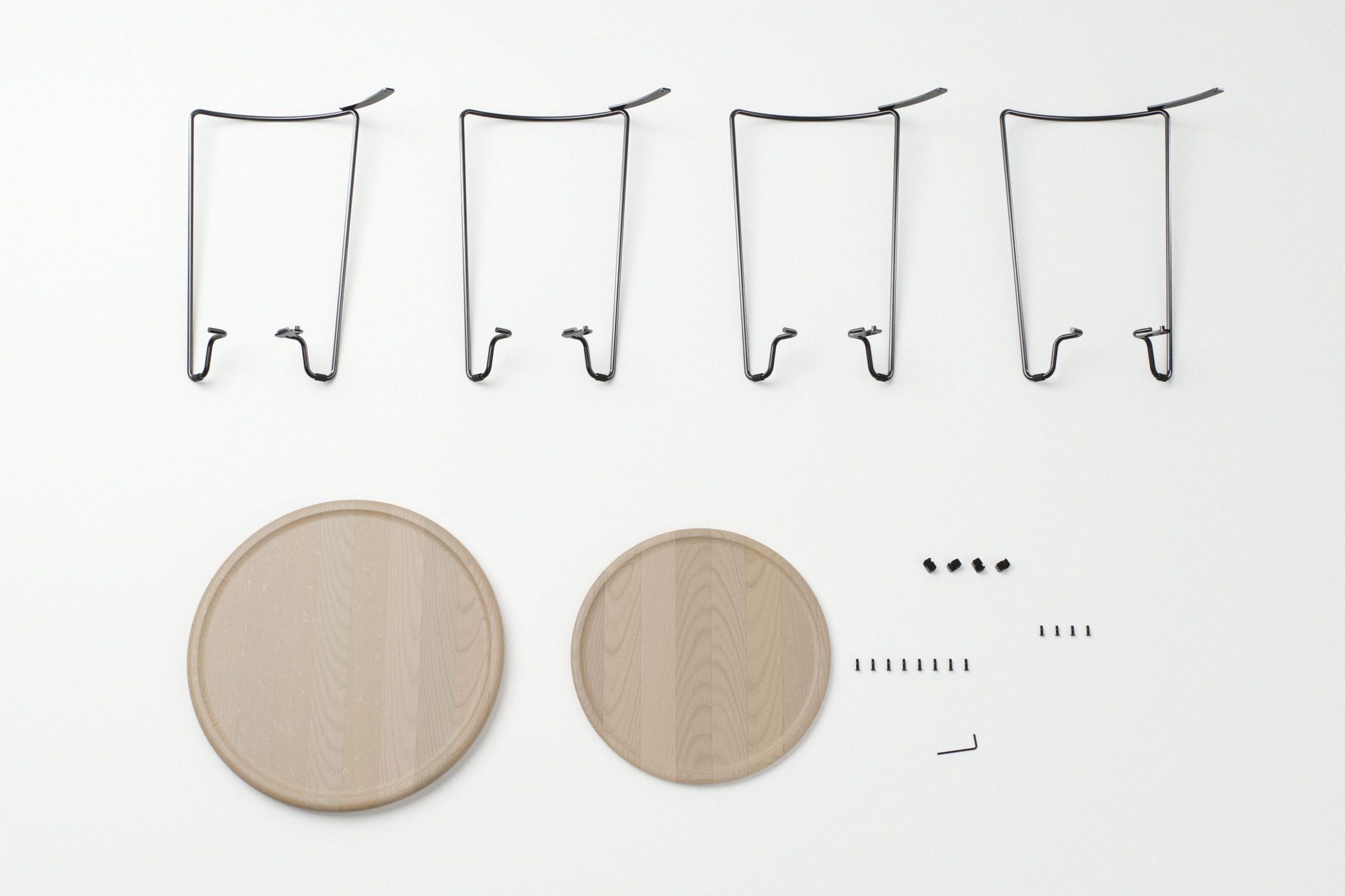
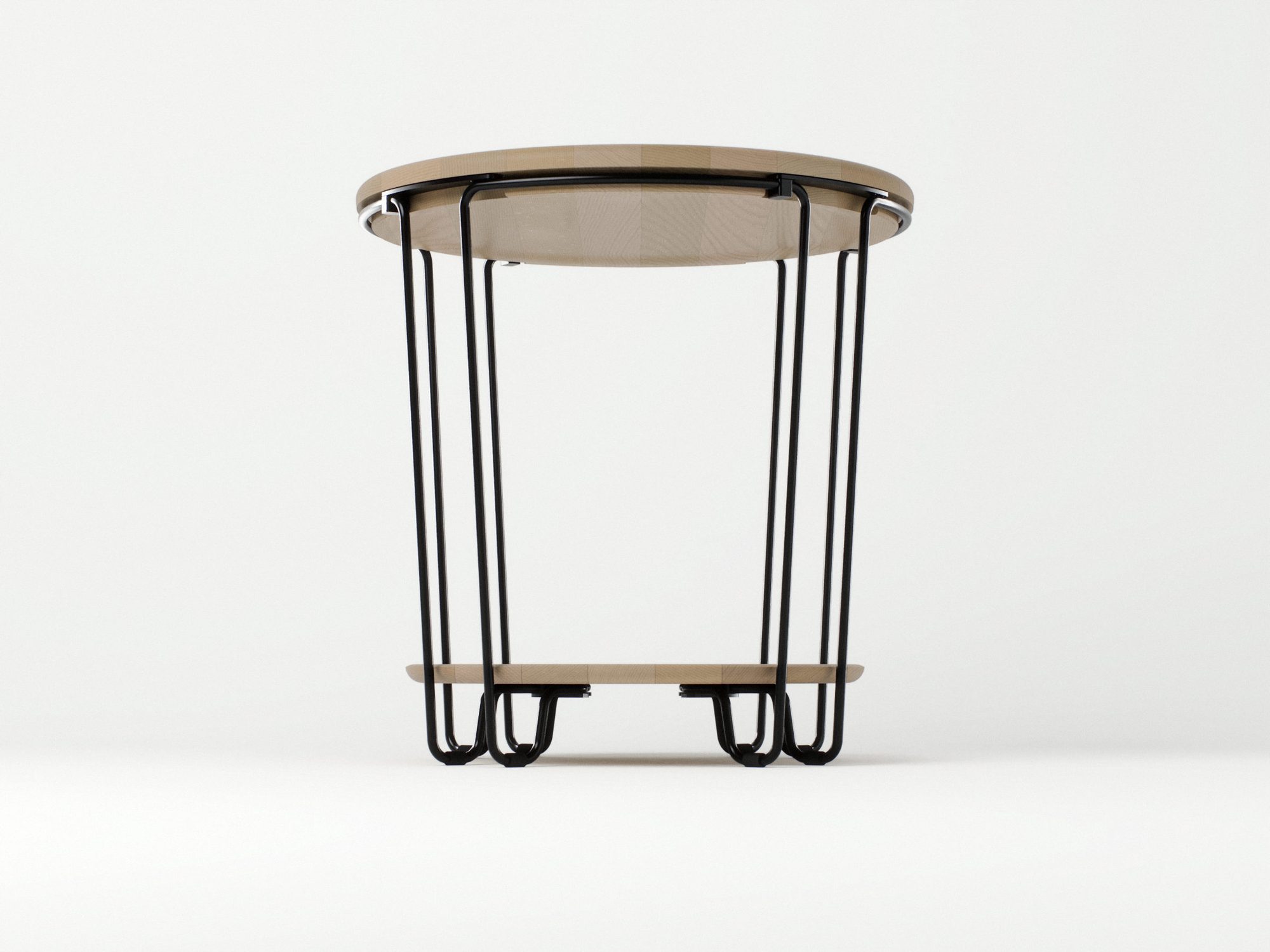
Because the four pieces are identical, they stack flat, so the box is about a third smaller and cheaper to ship. The legs splay out slightly for a steadier stance, and the oak top and shelf are cut to waste as little wood as possible.
Result
A resolved design concept, ready for 1st off prototyping
- FactFour identical frame pieces, built with one hex key
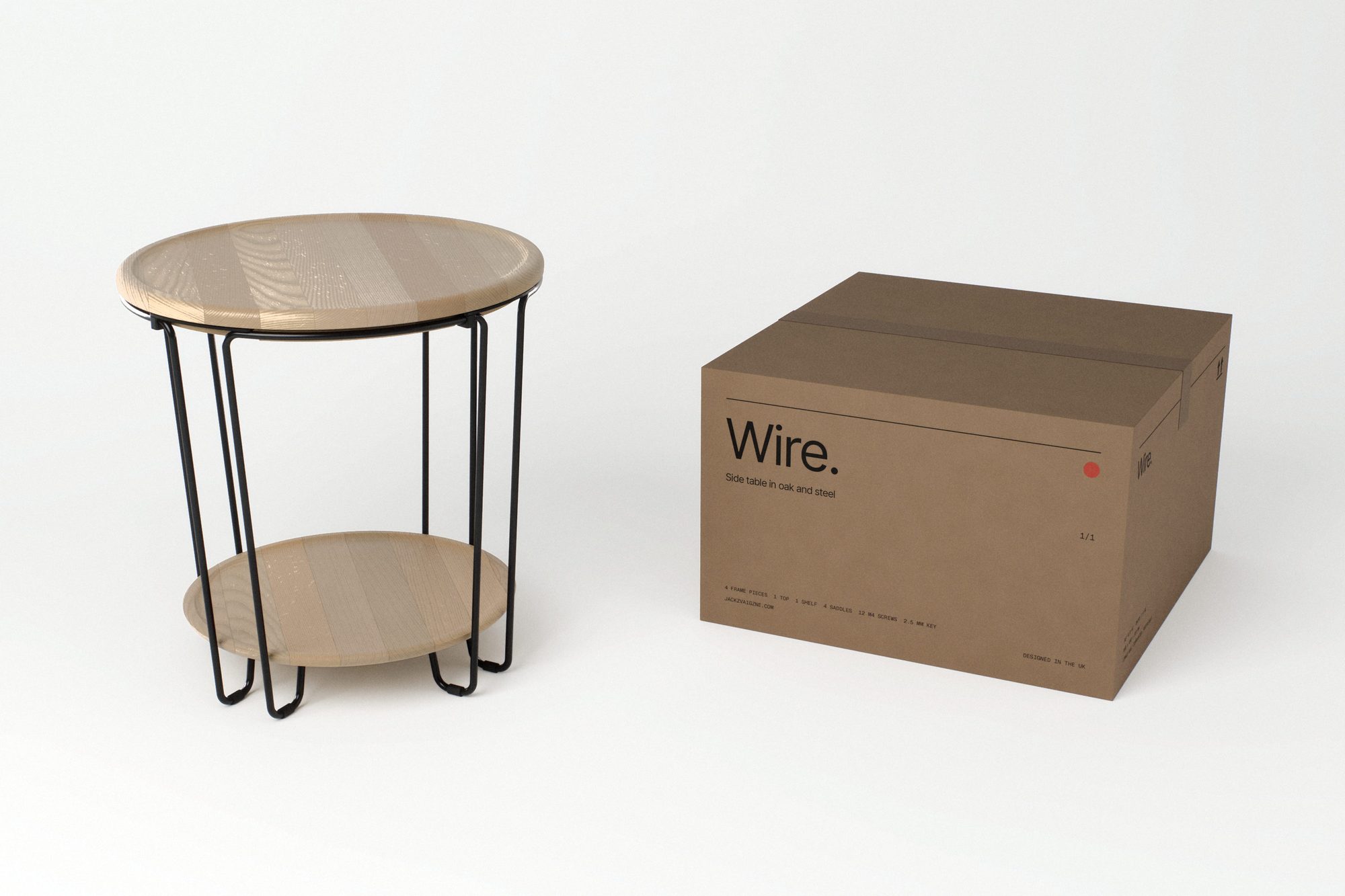
- PackagingDesigned for euro-pallet shipping, sitting in a 47 × 47 × 33 cm cardboard packaging considering UK and EU packaging regulations
- StandardsScreened using FEA to meet relevant EU furniture safety standards
- Environmental footprintScreening LCA completed, with estimate 10 kg CO₂e per table, up to leaving the factory
Client
Self-initiated
Project
Wire
Year
2026
Services
- Concept development
- Design for manufacture
- Material and footprint evidence
How AI was used
Wire is an experiment in how AI can assist the design process. AI acted as a thinking partner: it drafted the rebuild brief from the 2020 files, ran a design-for-manufacture review and a first check against the furniture stability standard, flagged the tip-over load early, and wrote the scripts that turn the CAD model into renders. Every decision stayed human: the joint, the draft angle, the bend rules, and keeping Wire a concept tested with a cardboard model and a 3D print.
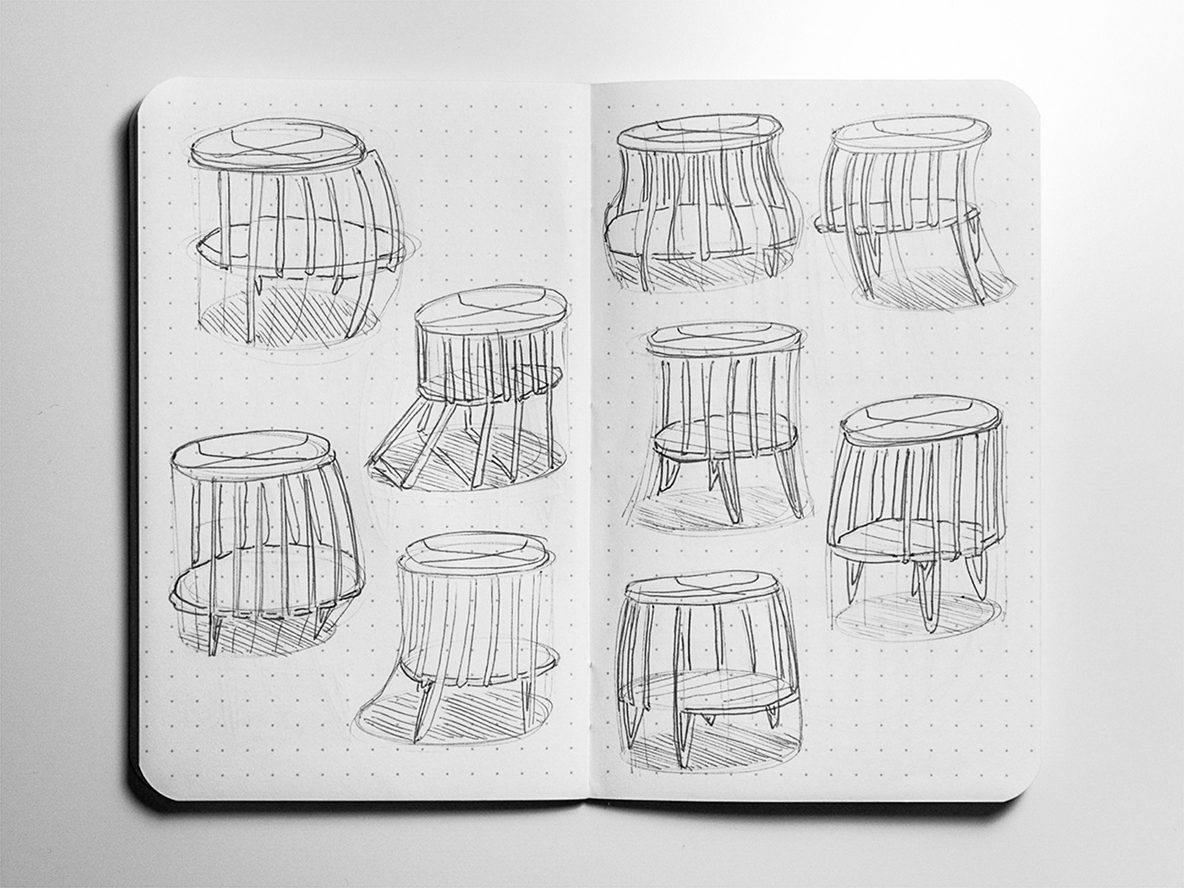
01 Origin
Sketches, 2019
Early sketches tested how a single wire could make the legs, the frame and the shelf support.
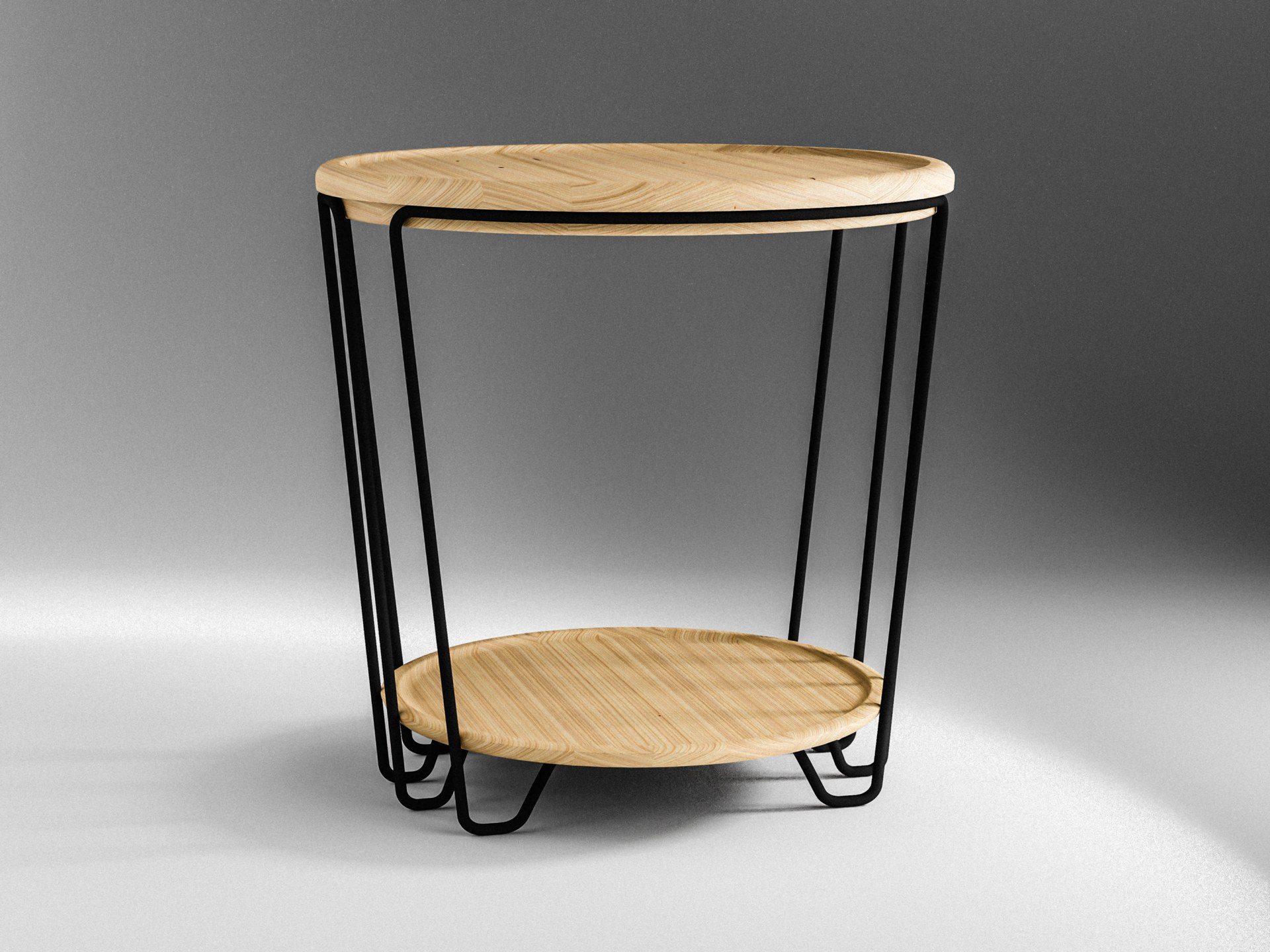
02 The 2020 model
Concept, 2020
The first version was modelled and rendered in 2020, with the welds hidden under die-cast brackets. It stayed a concept on screen and was never made.
03 The 2026 revisit
Rebuild for manufacture, 2026
Six years on, the 2020 files became the brief for a rebuild. The look stayed. Everything behind it was redesigned so a factory could quote from the drawings.
| 2020 | 2026 | |
|---|---|---|
| Joint | Welds hidden under die-cast brackets | One laser-cut plate, welded to one piece and screwed to the next |
| Frame | Four wire pieces | Four identical pieces from one bending program |
| Stability | Not checked | Checked by calculation to the EN 1730 method, lab test pending |
| Box | Not designed | One carton, 470 × 470 × 325 mm |
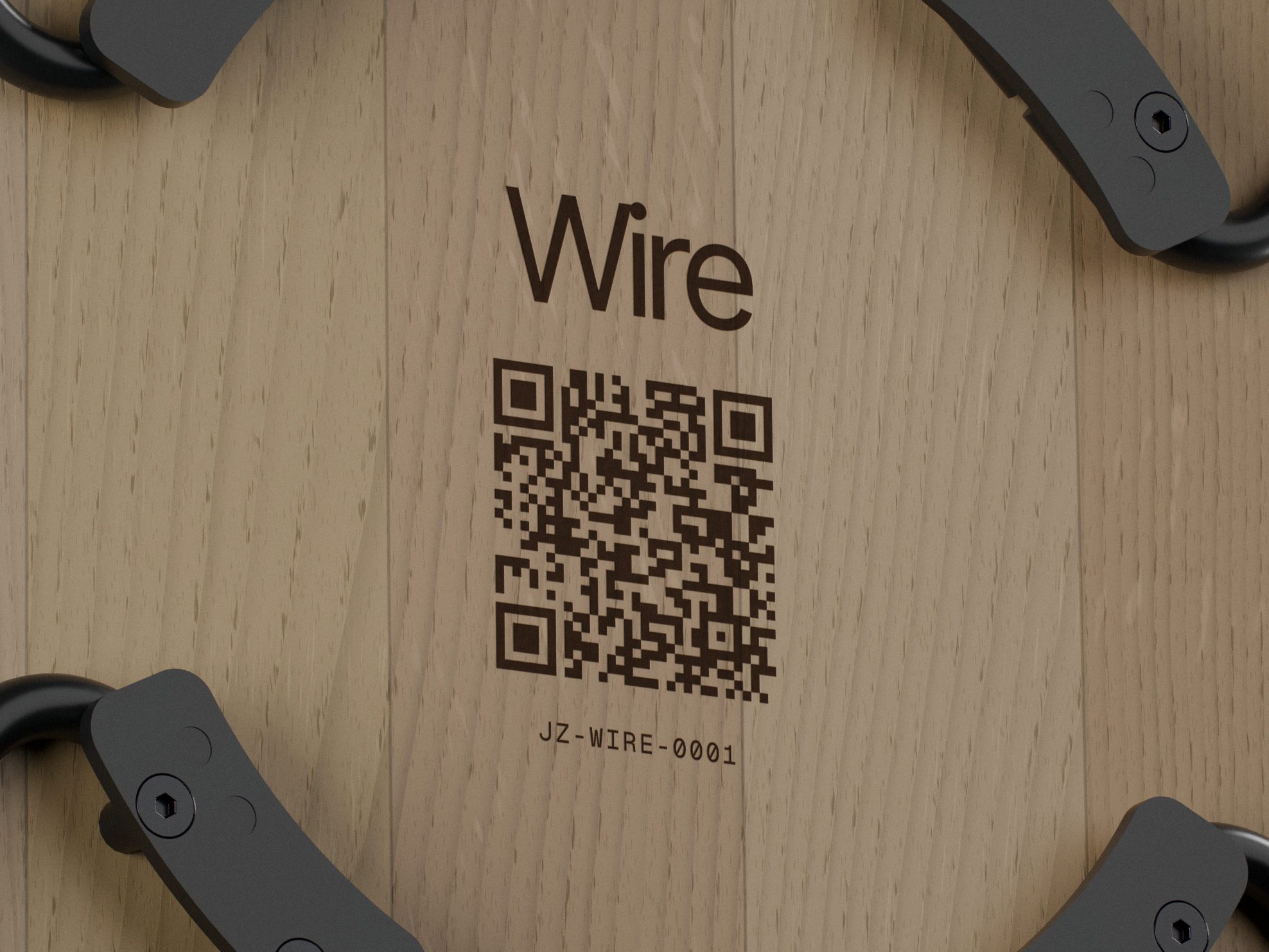
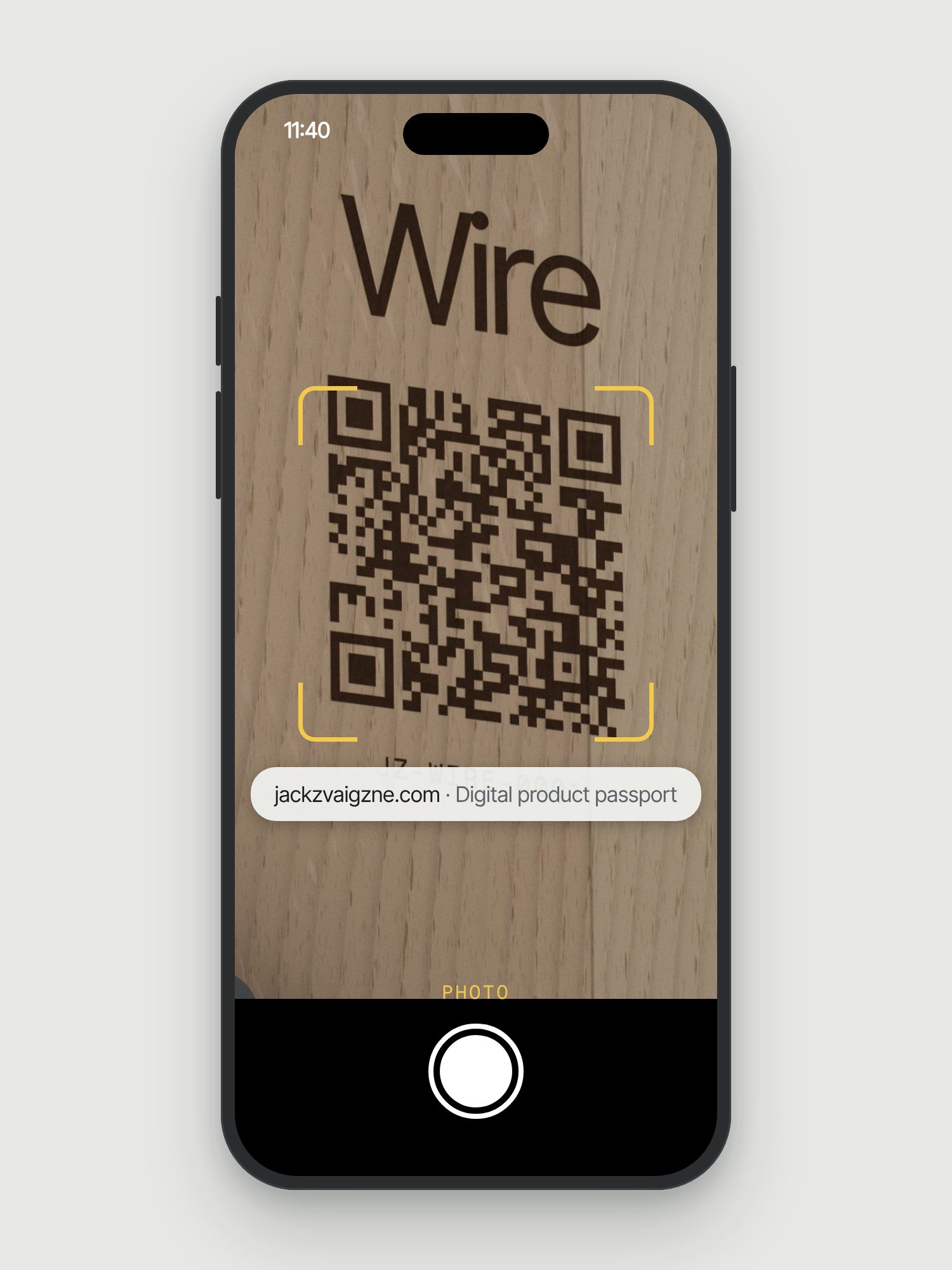
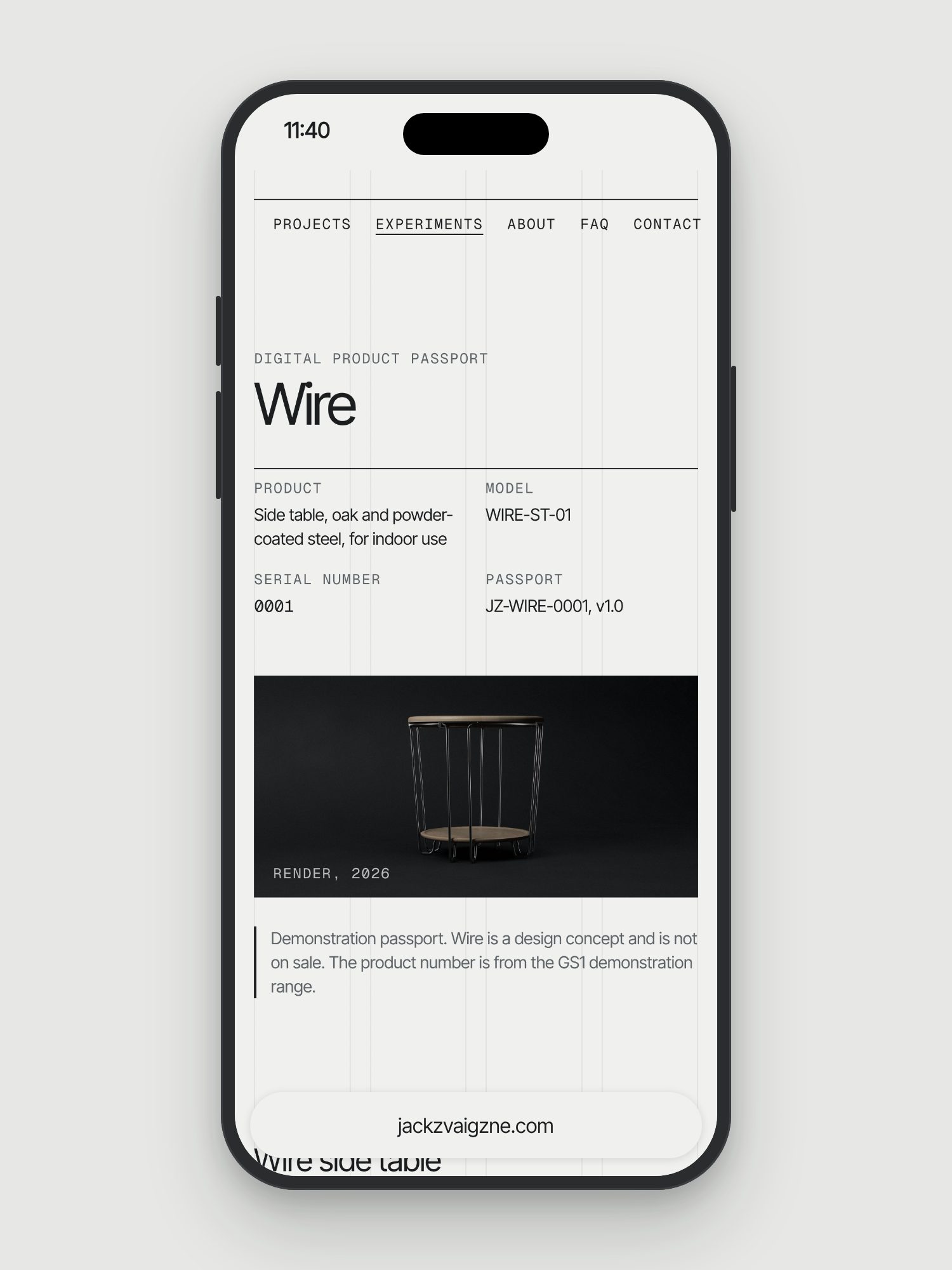
| Product data | None | A digital product passport, opened from a QR code under the shelf |
04 Design for manufacture
Bending
Every bend has one radius and every straight is long enough to grip, so any wire bender can quote from the drawings.
05 The joint
Joint
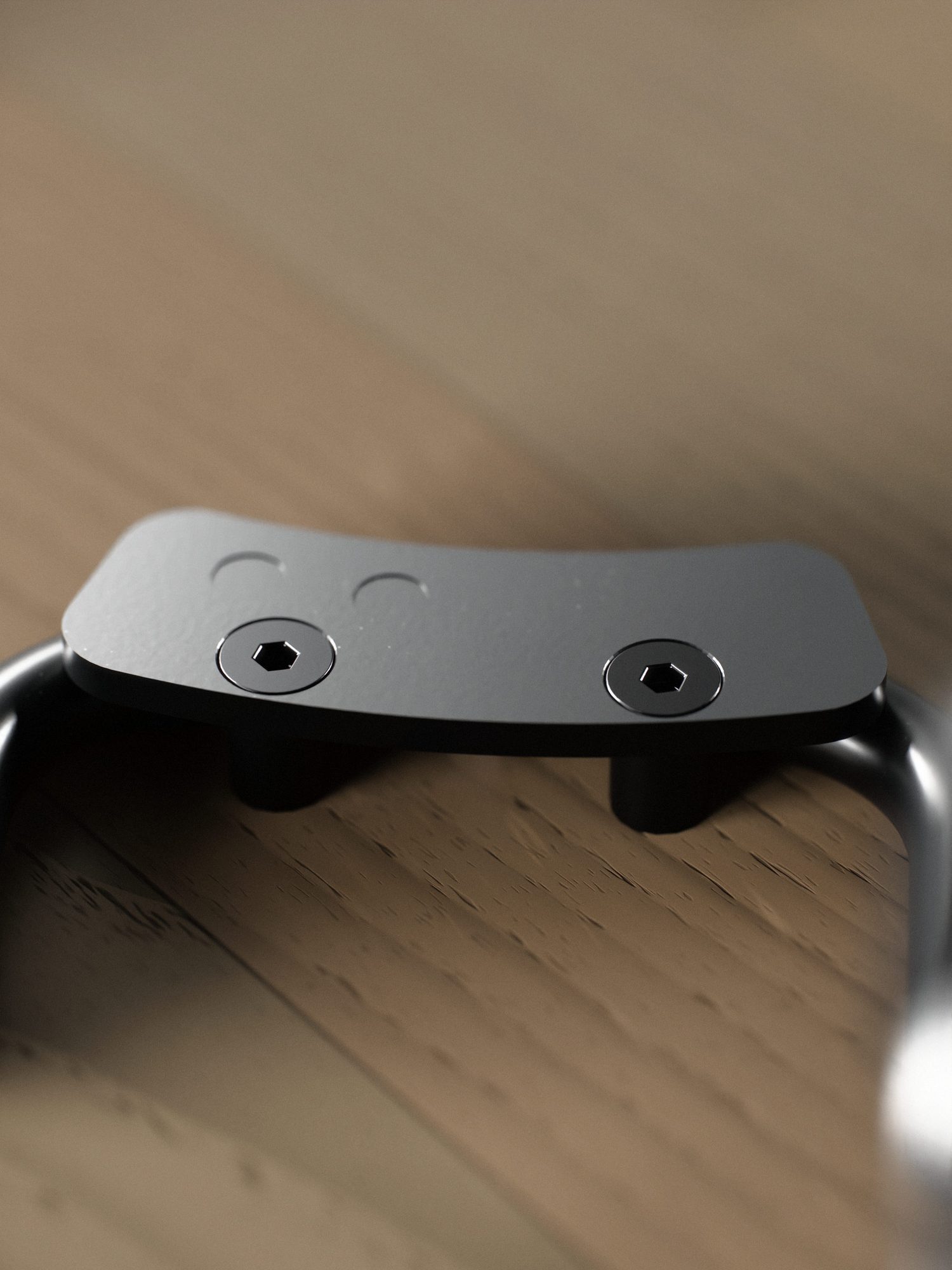
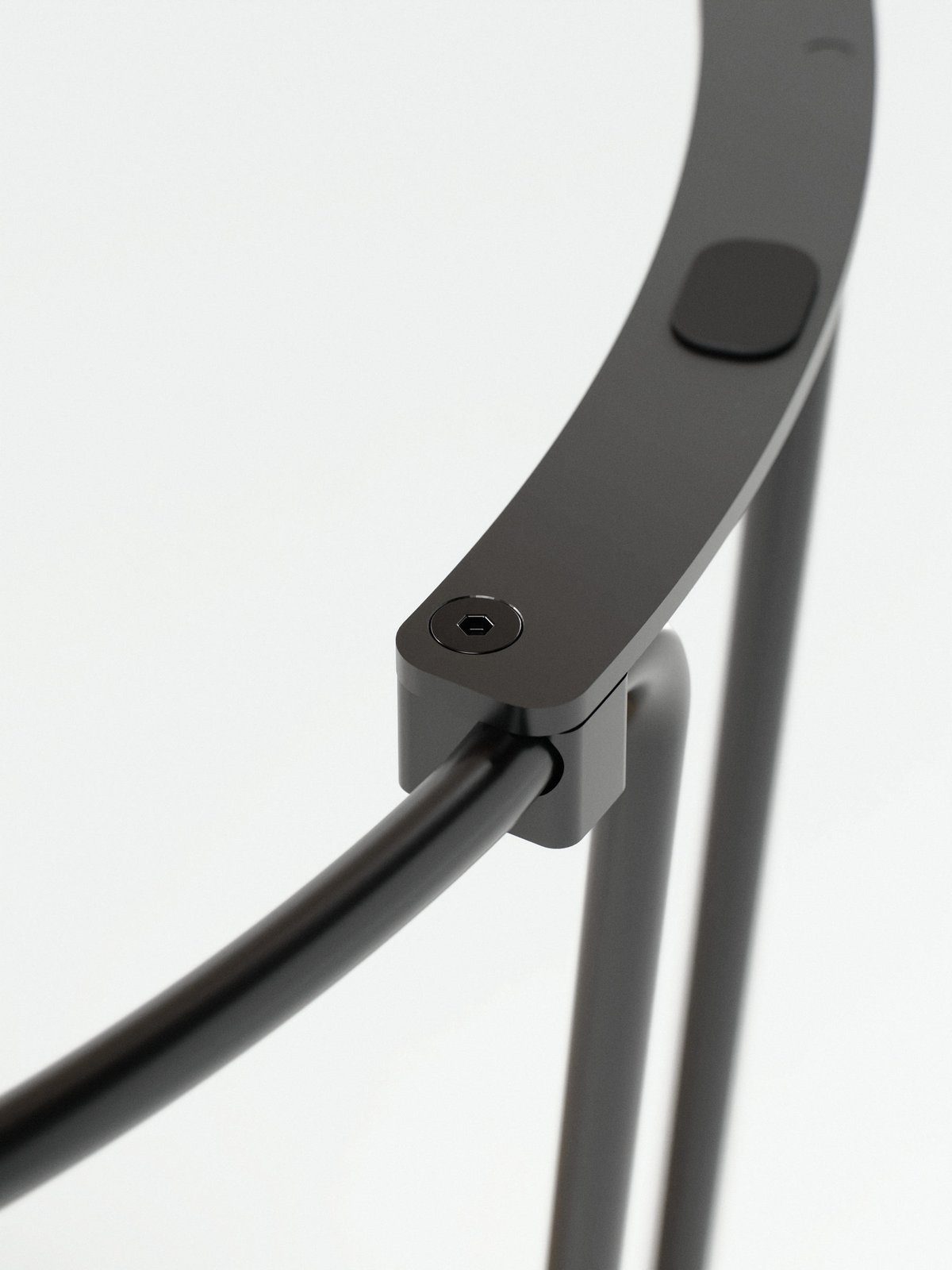
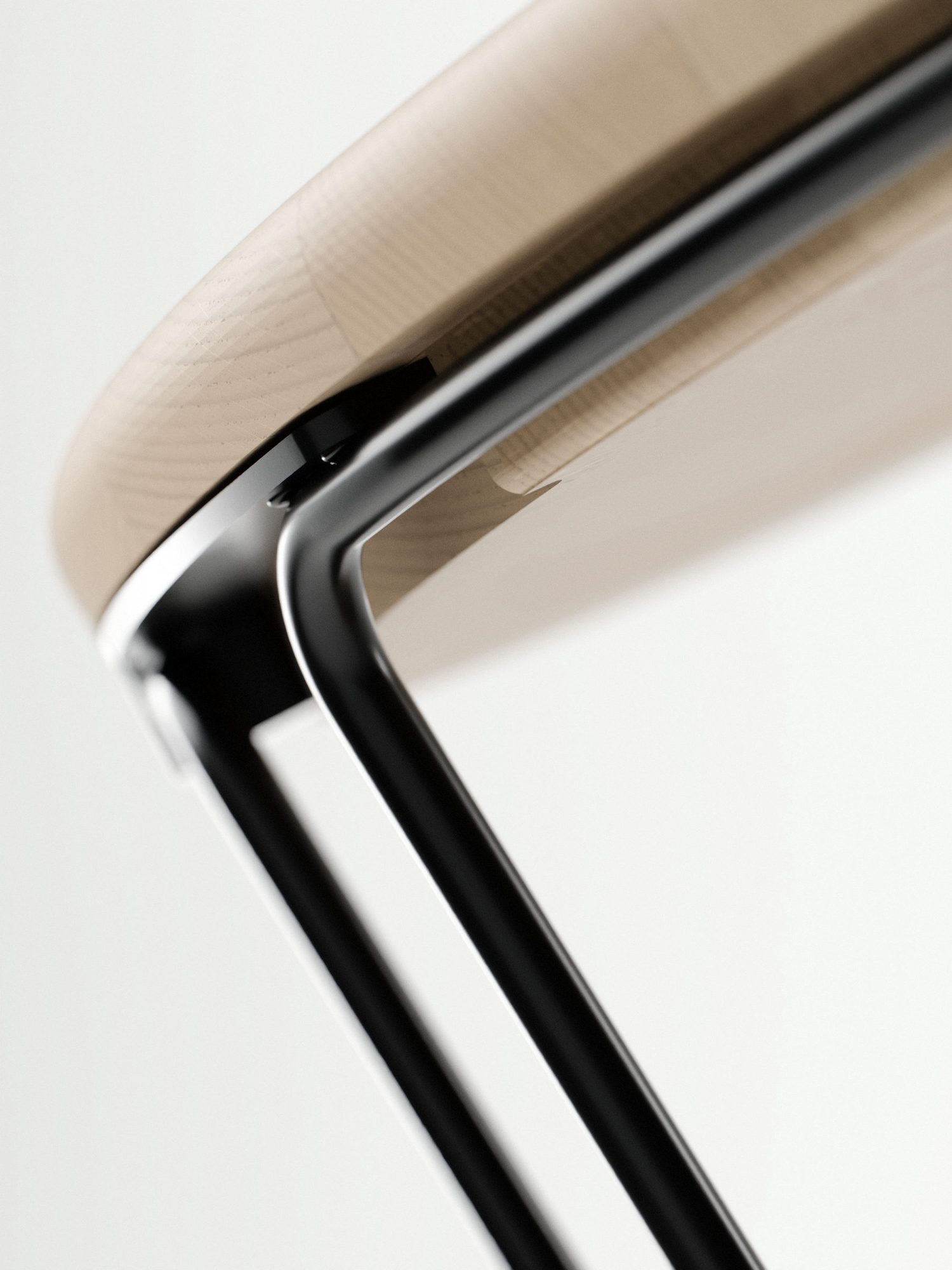
A laser-cut plate is spot-welded to one piece and screwed to the next. The top rests on the frame with no fixings.
06 In the box
Packaging
Four frame pieces, two oak discs, four saddles, twelve screws and one hex key.
08 Result
Final design
A table that ships flat and builds in minutes, shown at home beside a sofa for scale. All renders, 2026.
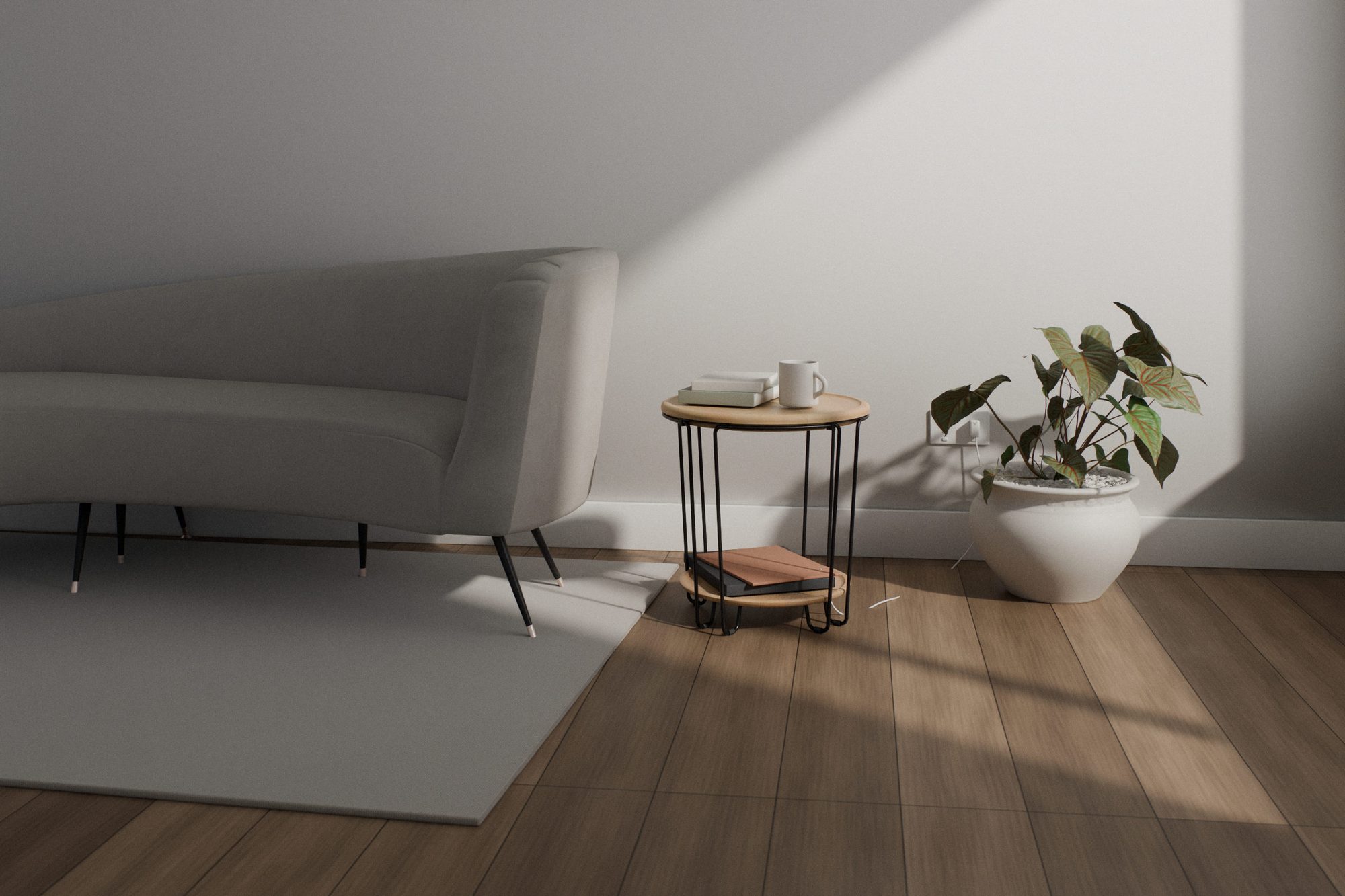
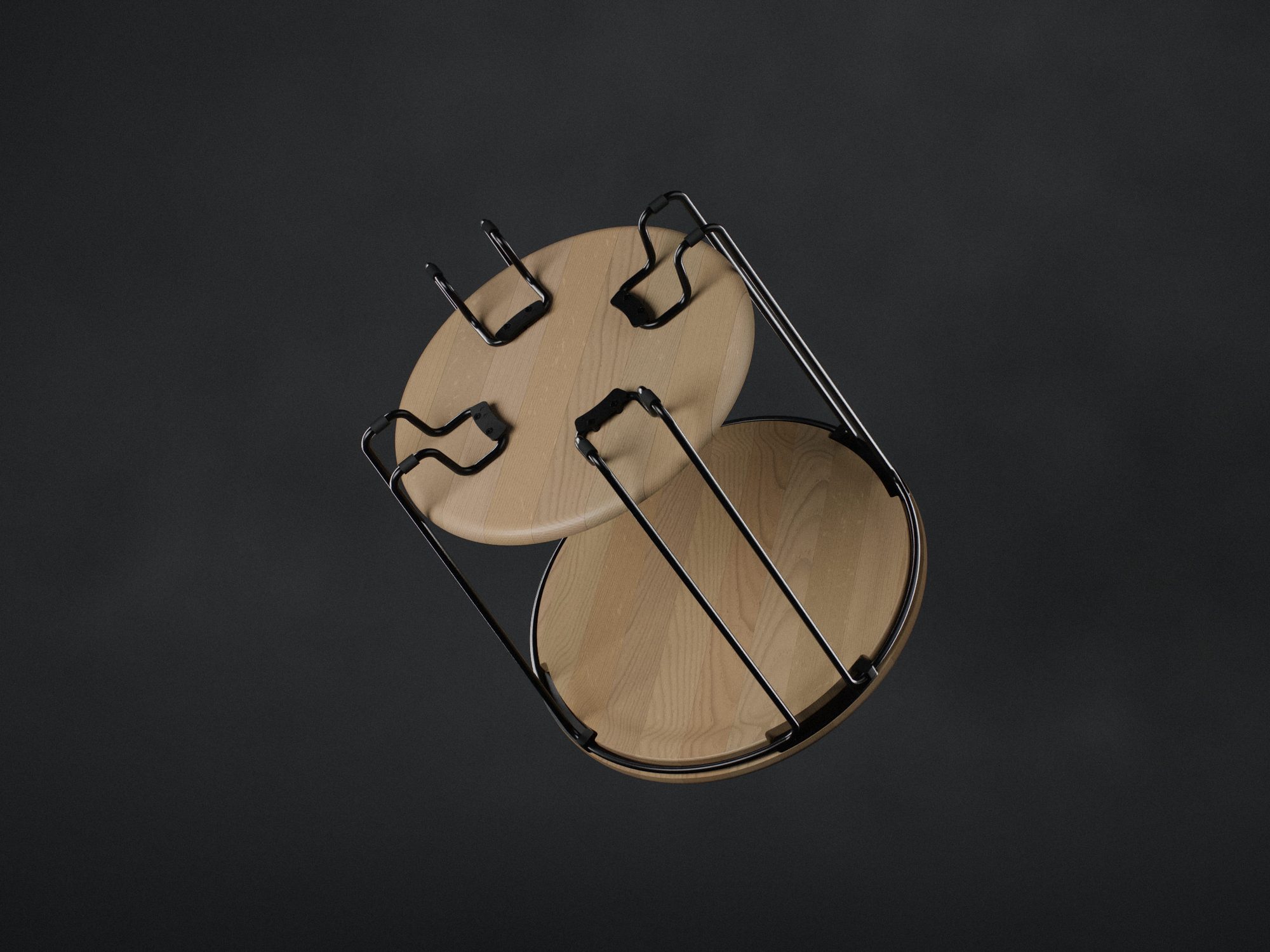
Sofa and plant models: Eric Chadwick / Wayfair and DGG, CC BY 4.0, modified.
09 Product passport
QR code and passport
A QR code etched under the shelf opens the table's digital product passport: what it's made of, how to care for it, repair it and recycle it, and a record of its life. It follows the EU's Ecodesign for Sustainable Products Regulation.
Contact
Get in touch
Tell me what you're making and where it's up to. The first call is free.
Based in south-west London, working with UK and EU clients.